

Projects
Work you can open
Software published in the open, and the modules and tools behind the practice. Real code, on GitHub, with nothing blurred.
01 / 04
Shipped, and in the open
I build my tools in public, because the work should speak for itself. What is here can be installed, read and checked.
Open source · MIT
keel
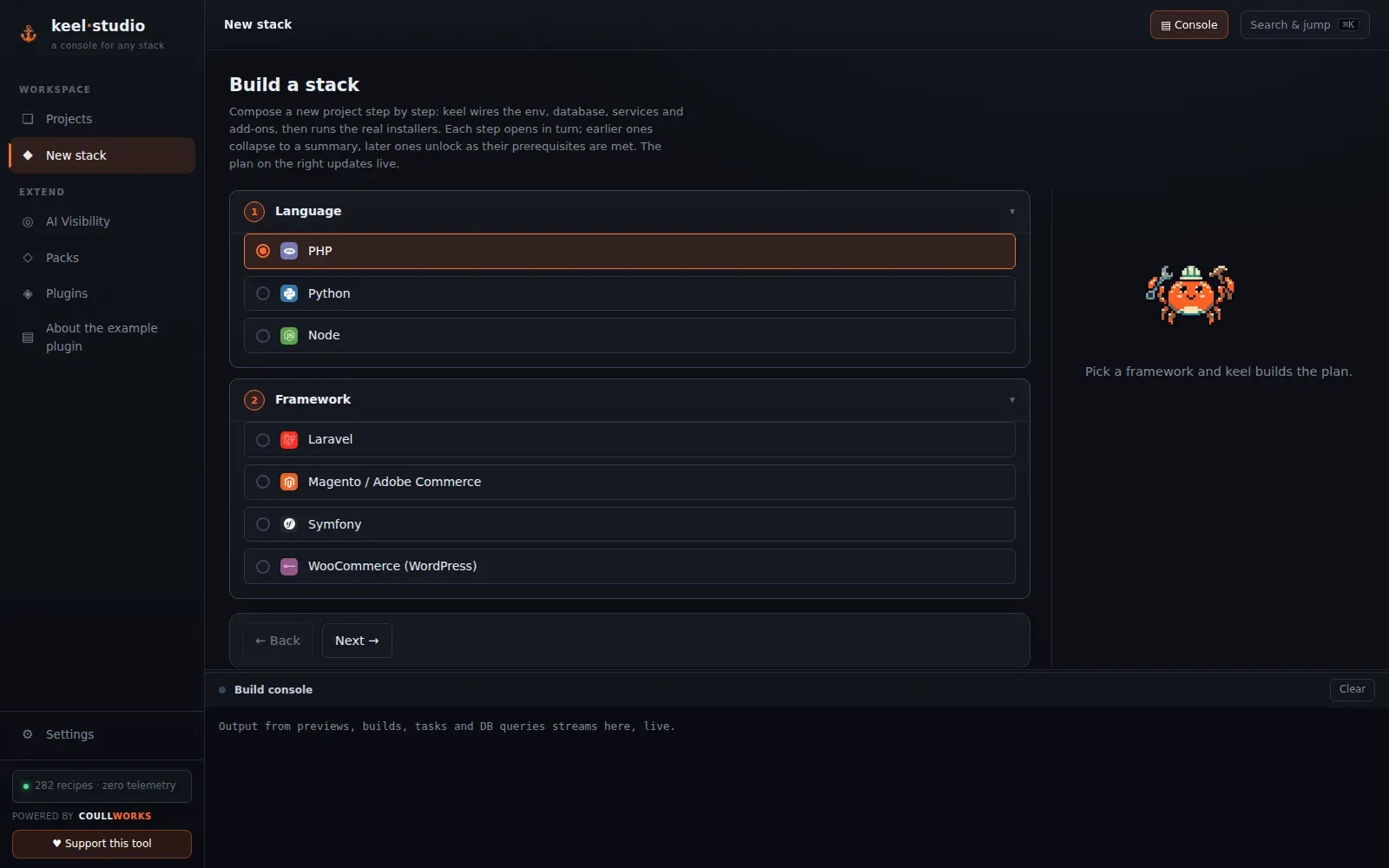
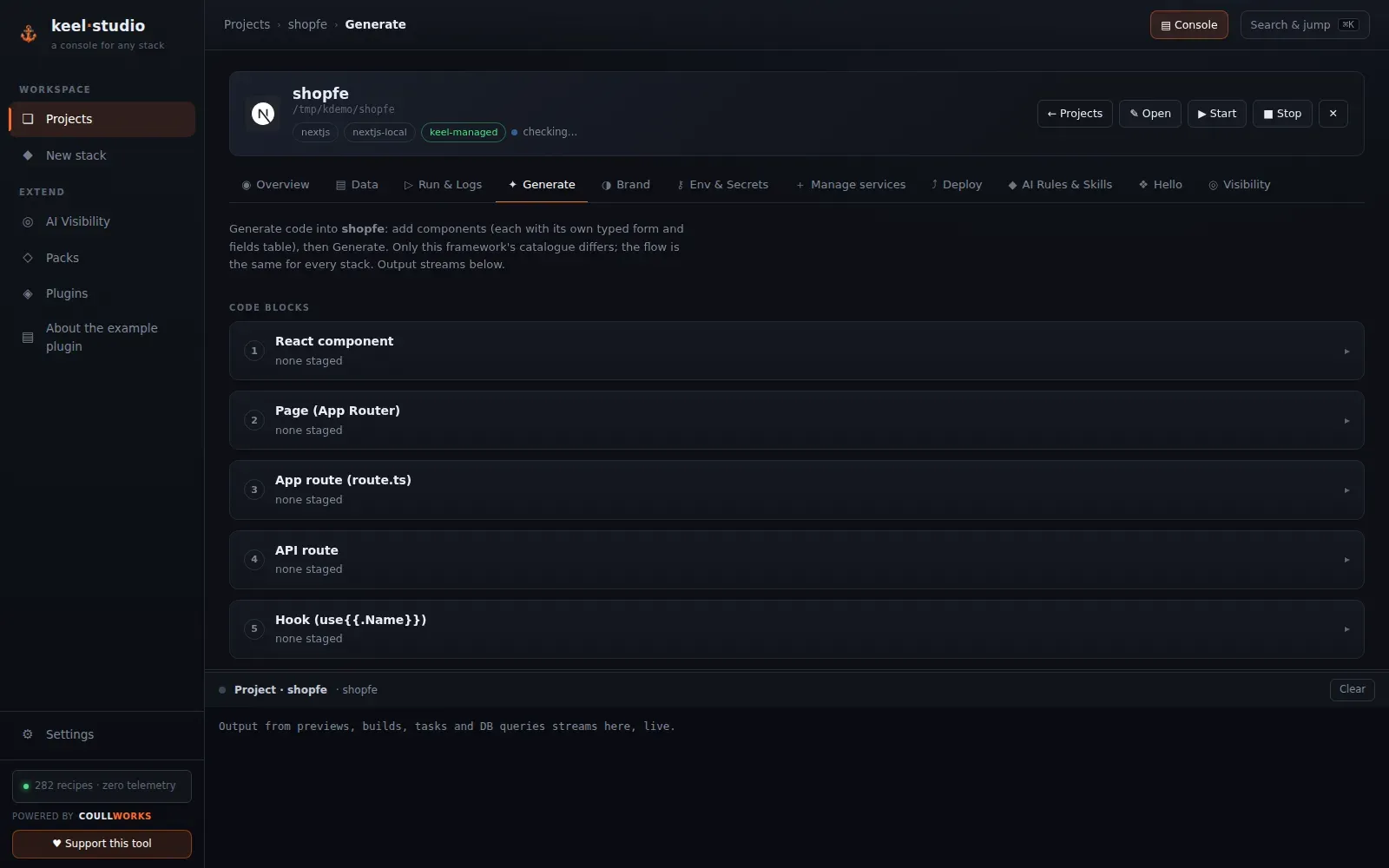
A web development studio for any stack: the framework’s real installers, its services and your .env, wired together.
AI-generatedMagento 2.4.7 to 2.4.9
Two modules
Infinite scroll for any product list, and a hero banner slider with Page Builder content types.
Also here
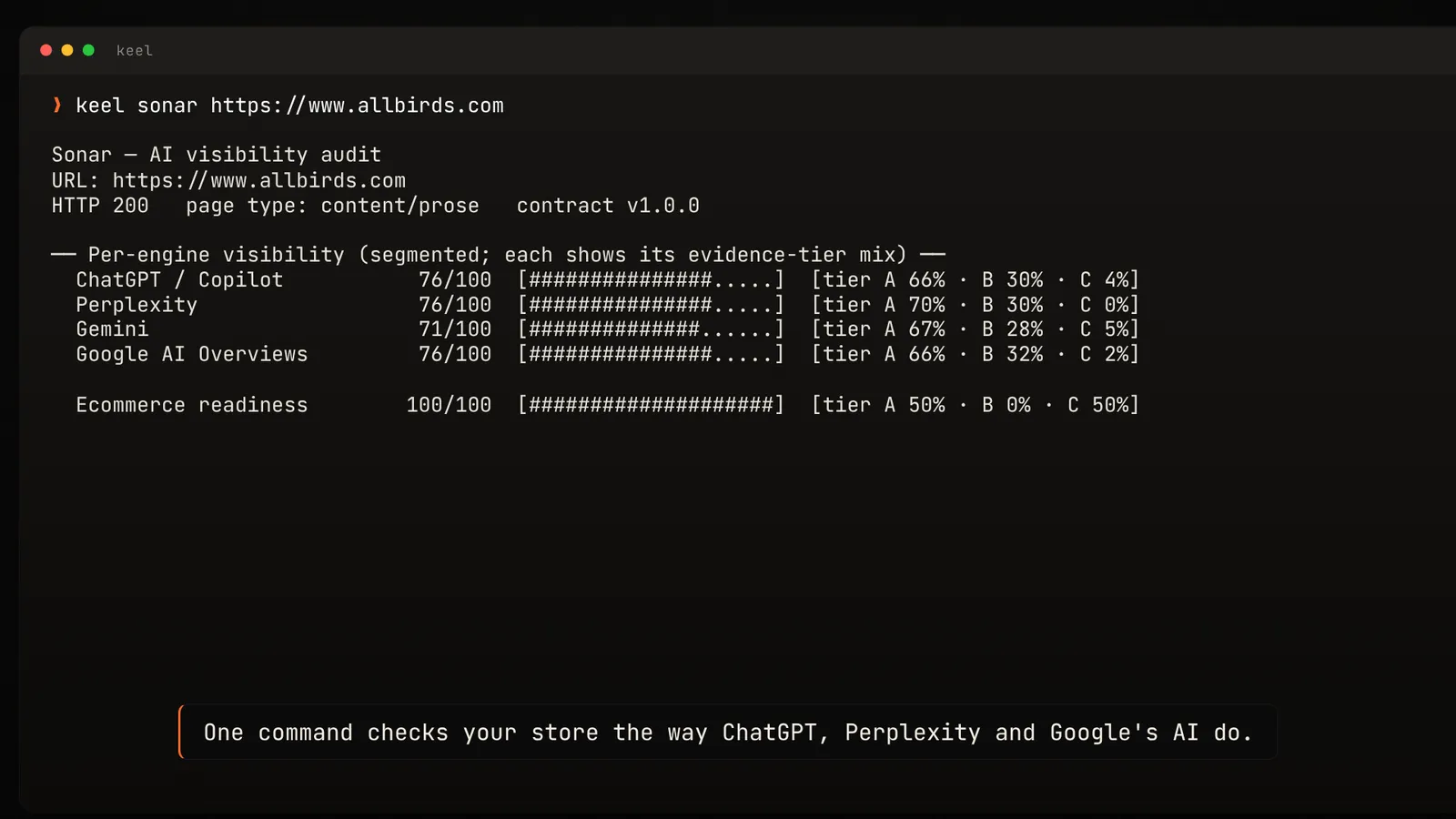
- sonar, AI visibility checks
- Free tools
- Shopify work, when named
Client work is shown only when the client agrees to be named.
Why it’s public
A tool you can read is a tool you can check before you trust it with a client’s store.
DC, CoullWorks
The paragraph it came from
Most freelance portfolios are screenshots and logos. You can’t tell from a screenshot whether the code behind it was careful, rushed or someone else’s.
So the tools I use every day are published where you can read them: keel on GitHub under MIT, two Magento modules installable with one Composer line, and free checks that run on this site. Anyone can open the code, file an issue or see how it handles the awkward cases.
Client work is different. It belongs to the client, so it only appears here when they’ve agreed to be named.

Can I use these tools on client work?
Mostly.
keel and the infinite scroll module are MIT licensed, so yes. The banner slider is licensed per store: fitting it for a client as paid work needs a commercial licence first.
Can I see client projects?
Only where the client has agreed to be named. Most of my work sits inside stores and systems that belong to someone else, so I describe it on the service pages instead of showing it here.
Do you build modules and apps to order?
Yes. Custom Magento modules, Shopify apps and checkout extensions, WooCommerce plugins and integrations with the systems around a store. Each is priced on the project, after a conversation about what it’s for.
Freelance developer buildsWhere do I report a bug in one of the tools?
On the tool’s GitHub repository, as an issue. That’s where fixes and releases are tracked, and where anyone can see what’s been reported.
Are the free checks really free?
Yes. They run in your browser or on this site, with no email and nothing stored. If a check turns up something worth fixing, the audits are there, at published prices.